
THE STORY
The Creation of Mr. Limpet
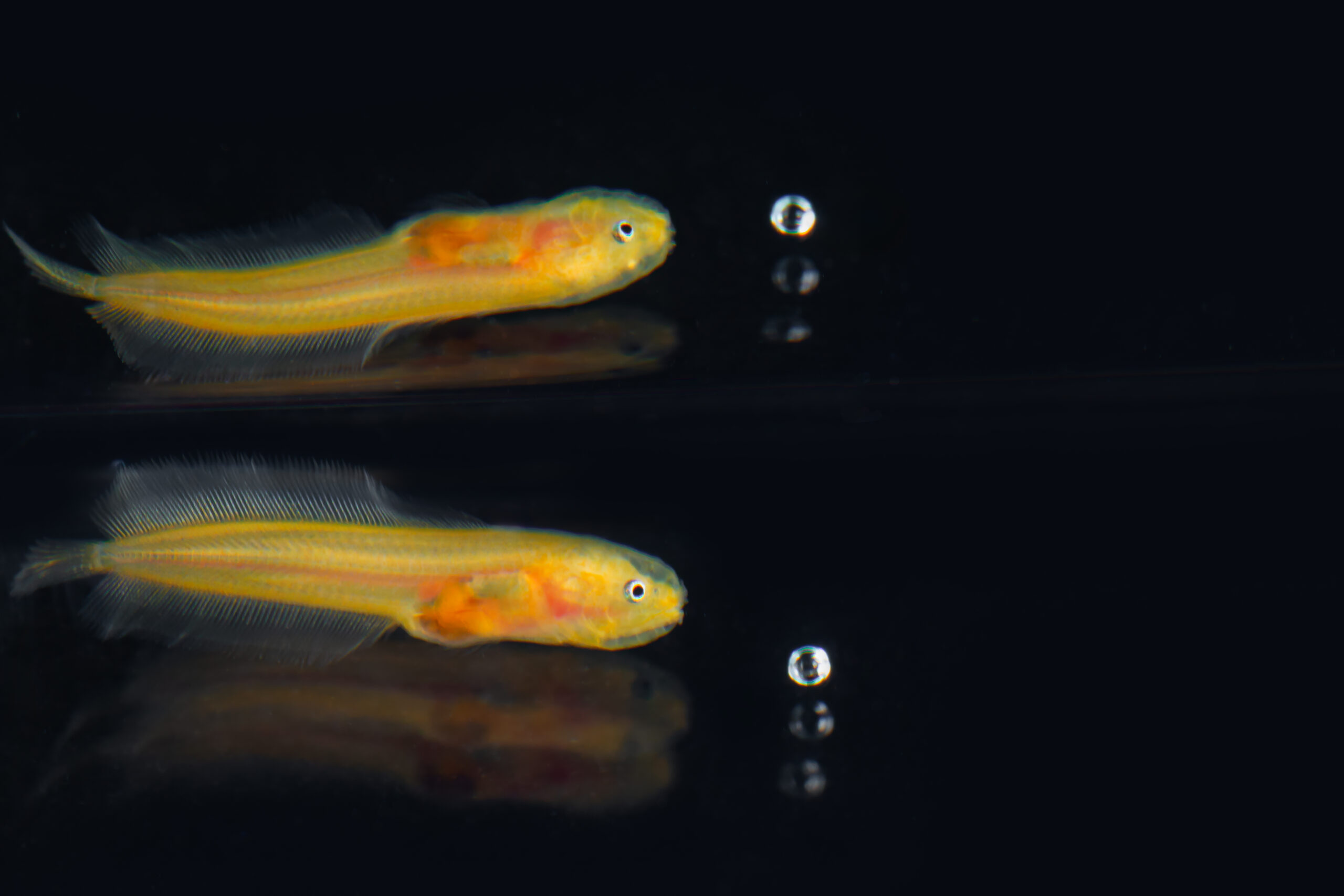
Mr. Limpet, a captive-bred larval Brotulid, with his reflection. Photo by Steve Zmak © Reef Life Creations
The room was pitch black when the transition occurred. In the quiet hours of a Tuesday morning, an hour or so before the dim morning light could touch the glass, the matriarch Brutus, kept for about thirty-four years, suddenly released her brood. There was no warning, no preparation on the calendar, and no time to debate a plan. Newborn Yellow Brotulid fry were entering the water column in total darkness.
What followed was a scramble against the clock. Operating by the dim glow of infrared light, newborn fry were dispersed into every active container available across the facility floor—some landing in systems already holding juvenile pipefish, others scattered into rearing tubs. But a handful of those newborns dropped directly into a failed, two-gallon glass punch bowl tattered with a handwritten piece of tape that read "White Cap 800."
Days earlier, that exact bowl had been a scene of total heartbreak. A massive seasonal run of eight hundred prized White Cap Goby larvae had unexpectedly crashed, resulting in total mortality. Instead of scrubbing the glass clean, the vessel had simply been left to sit fallow. In that quiet intermission, a massive, uninvited population of copepods exploded inside the dark container, completely devouring the organic debris. Without human intervention, a dead system had transformed itself into a crawling, ultra-dense carpet of live food.
When those pre-dawn Brotulid fry dropped to the bottom of the failed goby bowl, they didn't have to search for sustenance. They landed directly inside the ultimate feeding ground.
Over the grueling ten days that followed, the harsh biological bottlenecks of a handful of survivors met the unyielding biological reality, which claimed the rest of the scattered brood across the other systems. The bowl marked "White Cap 800" held the only survivors.
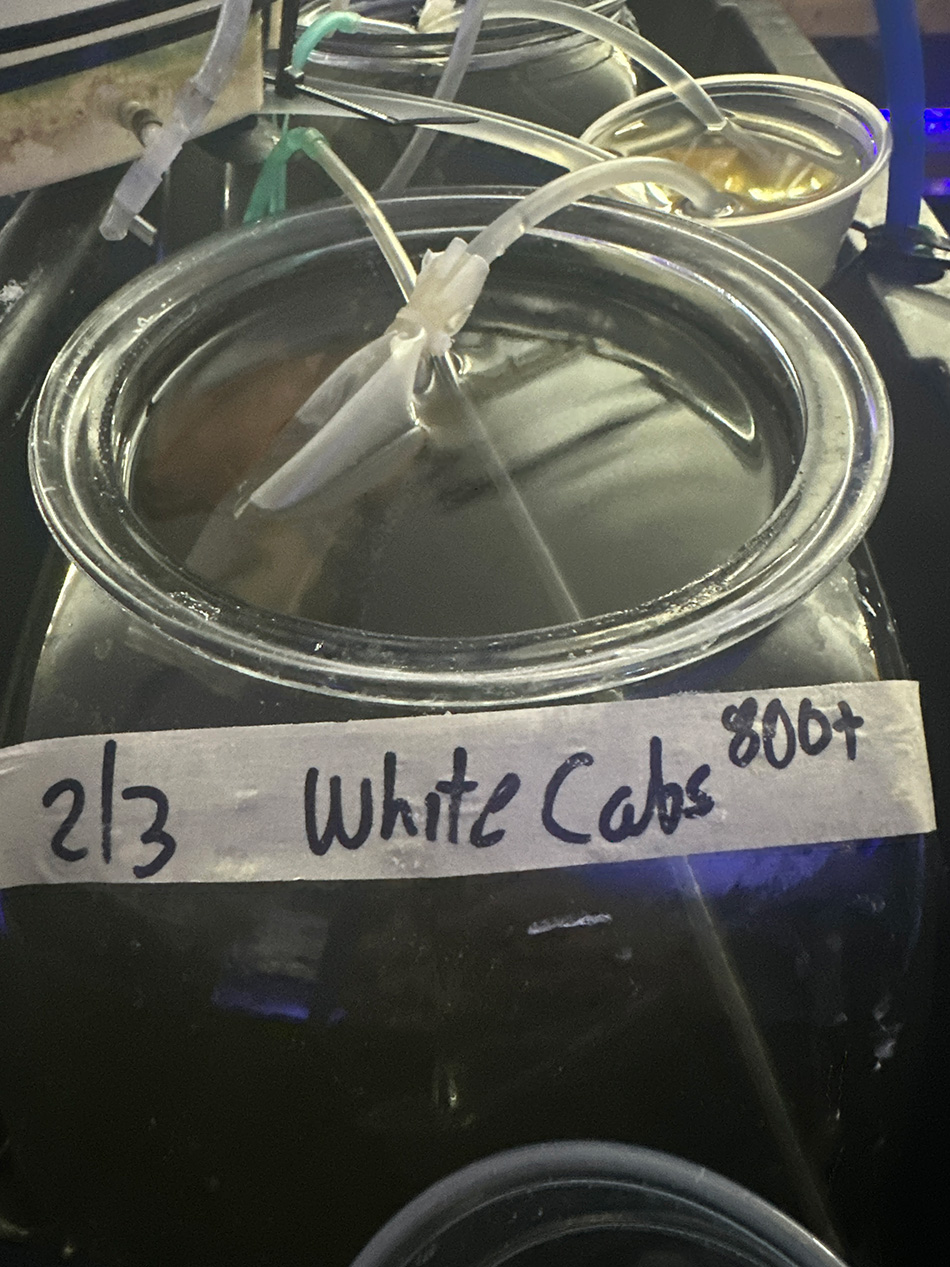
The 2/3 is the date in 2026, the White Cap larval, approximately 800 were place among the four bowls and the bowl marked with tape label had the largest quantity of larvae and copepods, but all four bowls containing the larvae died off, mostly overnight.
The numbers quickly dwindled down to two, until the entire effort came down to a single, solitary survivor navigating the gentle current of that final fallow loop.
Against the odds of a working facility, that lone cusk eel recruit thrived, hunted, and grew. His intense resilience and charming, distinct personality earned him the name Mr. Limpet. A journey that had begun decades earlier breeding common clownfish had quietly come full circle on a table counter—culminating in a single, historic fish swimming safely still in a dark punch bowl after many months. It wasn't guided by a textbook, and it didn't wait for permission. It simply happened.
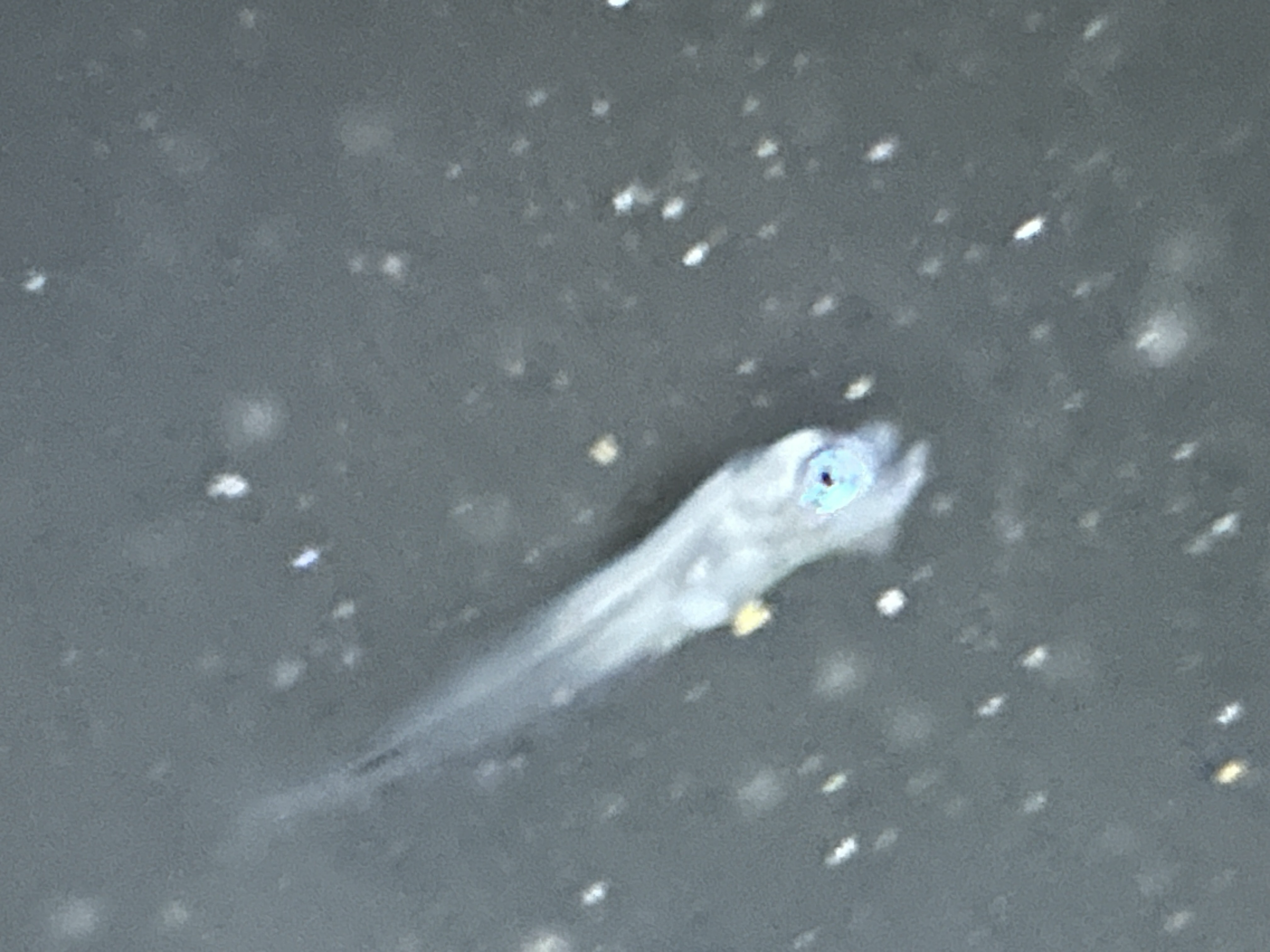
A newborn Brotulid larva from one of the early broods, about an hour old. Like most of those broods, it did not survive.
INTO THE OTHER SPECIES
Mr. Limpet wasn't the only one to come out of a punch bowl. He's just the one with a story dramatic enough to open with.
“Mr. Limpet” is a house nickname inspired by the 1964 film and is not affiliated with or endorsed by Warner Bros. Entertainment Inc.